
APPLICATION GUIDE · INDUSTRIAL DOUBLE-SIDED TAPE
Double-Sided Tape for Mirror Assemblies: Qualify the Backing and Frame
Evaluate mirror assembly tape against backing, frame, panel size, orientation and retention needs.
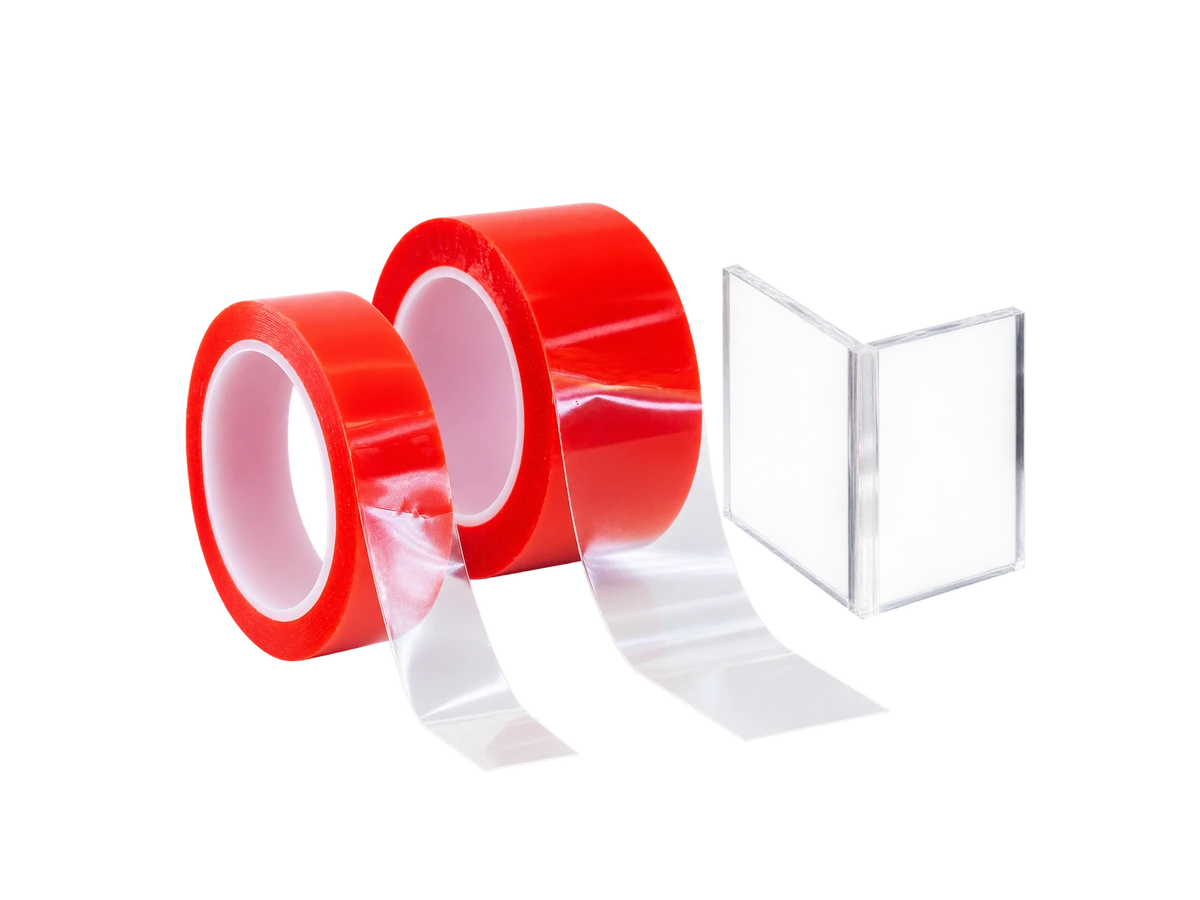
Double stick tape for mirrors should be selected only after identifying the actual mirror backing and frame surfaces, panel load, orientation and retention requirements.
How to choose double-sided tape for mirror assemblies
A mirror assembly does not always bond tape directly to glass. The rear surface may be a coating, protective film, paint or backing layer. The frame may be metal, plastic or a coated panel. Record both contact surfaces and check whether the backing manufacturer permits adhesive bonding.
Identify the mirror backing and frame surfaces
BROADYA lists acrylic foam tape for glass and metal bonding, but that general use case does not establish compatibility with every mirror coating. The clear foam tape article covers transparent glass-to-plastic bonding, a different surface pair.
A vertical mirror places sustained load on the bond and can create peel at the top edge. Panel size, frame stiffness, edge clearance and the consequences of release affect the retention design. Determine whether tape is the sole retention method or works with clips, channels or other mechanical features.
How panel size and orientation affect retention
Use representative mirror lots and frame finishes, apply the intended cleaning and pressure, then evaluate retention after the required temperature/humidity aging. 3M’s structural glazing guide describes controlled surface preparation for its named glazing system; its specifications do not transfer to a different tape or mirror construction.
The tape may contact paint, polymer, foil or another backing layer rather than the glass. That layer can be the limiting interface, so identify its chemistry and test adhesion without damaging the reflective coating.
Test the actual panel size, frame, orientation, sustained load, temperature/humidity aging and failure containment required by the product. Use mechanical retention where the safety design requires it.
Treat appearance and safety as separate requirements
See the related clear foam tape for transparent glass-to-plastic bonding for the narrower application details.
Send the mirror backing details, frame finish, panel size, orientation and required safety test before selecting a tape for qualification.
How to qualify tape on the finished mirror assembly
The adhesive usually bonds to the mirror’s rear construction, not to an abstract “mirror” surface. Depending on the assembly, the tape may contact a protective backing, paint, coating, film or an exposed glass area. The frame can be bare metal, coated metal, plastic or a composite. Obtain the mirror supplier’s backing description and identify the actual contact zones on both parts. If the reflective coating or protective layer is not intended for adhesive bonding, a tape sample placed on the wrong face can give a misleading result or damage the mirror.
Map the loads through the finished assembly. A vertical panel places sustained load on the bond and may concentrate peel near an upper edge. A flexible frame or thin backing can move differently from the mirror panel as conditions change. The required bond area, edge distance, frame stiffness and orientation should be considered together, not selected from panel dimensions alone. If the consequence of release is serious, design the retention system around the project’s safety requirements and decide whether tape is primary retention, secondary retention or one part of a combined arrangement.
Plan trials on mirror and frame samples from the intended production sources. Use the actual cleaning process, pressure and placement method; inspect alignment and trapped air as well as initial attachment. Conditioning should reflect the assembly’s service environment and the mirror maker’s limitations. When testing a transparent or visible bondline, evaluate appearance, squeeze-out and edge visibility as separate acceptance points from retention. BROADYA lists acrylic foam for glass and metal applications, but this does not establish compatibility with every mirror backing or coated surface.
Check backing compatibility and edge behavior
External guidance must stay within its named scope. A 3M structural glazing guide, for example, describes its specific glazing system and does not qualify a mirror assembly that uses a different tape, backing or frame. Use the mirror and tape suppliers’ applicable documents, then validate the complete assembly with representative material. If a panel includes a protective film, establish whether it remains in service or is removed before bonding; that single process detail changes which surface the tape must adhere to.
The sourcing request should include the mirror construction, backing material, frame finish, panel dimensions and weight, orientation, intended retention method and appearance limits. Ask for the exact candidate grade and sample format, then record what the trial proves and what it does not. Do not convert a successful small coupon into a blanket panel-size limit without a design basis. For a high-consequence mirror, obtain the responsible engineer’s acceptance of both retention design and the validation plan before production release.
What to include in a mirror-tape specification
A mirror may also have coatings or backing layers that are sensitive to the cleaning chemistry or pressure used during application. Check restrictions from the mirror manufacturer before preparing samples. If the intended adhesive contact is on a coated back surface, verify that the coating itself is suitable for the bond and that it remains intact during the relevant conditioning. The test record should identify the contact face, not just the mirror brand or glass thickness.
For large or heavy panels, define the engineering review threshold before a tape trial begins. The responsible designer may need to consider redundant retention, installation controls, inspection access and consequences of breakage. A product guide cannot replace that assembly-specific safety review. For smaller noncritical parts, the review may be simpler, but the same evidence discipline applies: identify the surfaces, document the method, and state which configuration the test actually represents.
Record how the mirror is handled between cleaning and tape placement, because fingerprints or dust can contaminate the intended bonding face. Specify whether the backing film is removed, which side is bonded and how the panel is supported while the frame is installed. If the mirror supplier changes the backing, repeat the compatibility review before assuming the former trial remains applicable. A clear drawing and process note make the tested assembly reproducible and help prevent a later production change from altering the adhesive interface unnoticed.
Frequently asked questions
Does tape for a mirror bond directly to the reflective glass?
Not necessarily. The tape may contact a backing, coating, protective film or frame. Identify the actual bonding face and confirm that the mirror supplier permits adhesive attachment there.
What makes a mirror tape joint different from a small coupon?
Panel weight, orientation, frame stiffness and edge peel affect the finished assembly. A small coupon does not establish retention or safety for a larger mirror.
Can acrylic foam tape be used on any mirror?
The product family may be a candidate for some glass or metal bonds, but mirror backing and coatings vary. Confirm the exact construction and qualify the complete mirror-and-frame assembly.
Discuss this tape application
Share the substrates, joint geometry, process and service conditions so the team can scope an appropriate tape construction.