
CLEAR ACRYLIC FOAM · VISIBLE JOINTS
Clear Foam Tape for Transparent Glass-to-Plastic Bonding
A clear roll is only the starting point: assess optics, edge geometry, substrates and thickness in the finished joint.
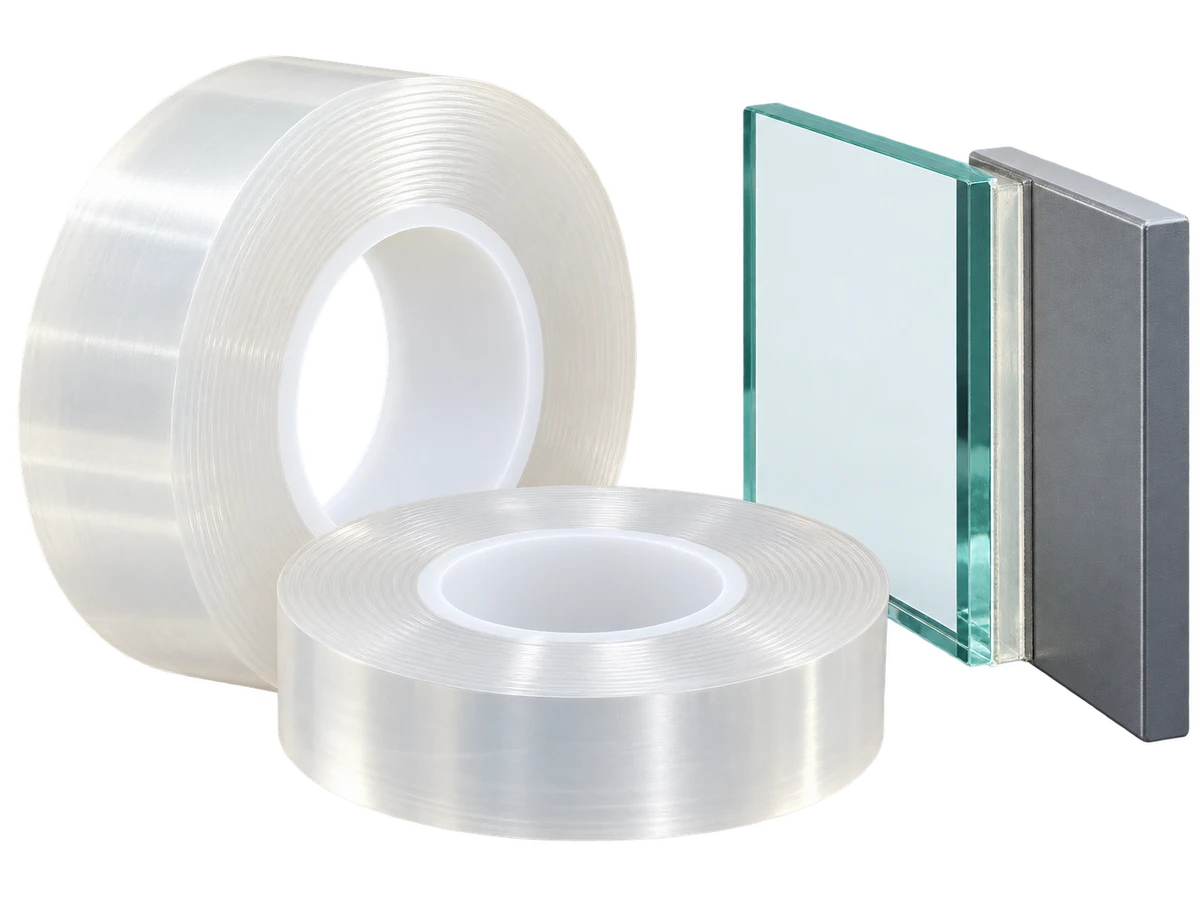
Direct answer. For clear foam tape in a visible glass-to-plastic joint, start by defining the optical requirement and viewing conditions, then screen a clear acrylic foam construction against both surfaces, bondline geometry and service movement; a clear roll does not guarantee an invisible joint. The final appearance depends on the real substrates and the completed joint, not the roll alone.
“Clear foam tape” spans consumer mounting products and industrial acrylic foam products. This page addresses a designed glass-to-plastic assembly where a visible bondline matters; it does not treat all clear mounting tapes as interchangeable.
The Broadya acrylic foam tape range is a product-family overview, not an optical qualification for a specific joint.
Set the optical requirement before choosing tape
Decide whether the bondline must be colorless, low haze, visually unobtrusive from one viewing side, or simply consistent with a tinted or printed part. A clear tape can still reveal haze, edge squeeze-out, trapped air, color shift or a visible bondline under the finished product lighting. Define the viewing distance, illumination, background, exposed edge and acceptable appearance before comparing samples.
tesa ACXplus 73205 is a manufacturer example of a transparent 500 µm acrylic foam product for glass, acrylic and polycarbonate applications. 3M VHB 4910 is another clear acrylic foam construction, listed at 1.0 mm. Their thicknesses and product descriptions are useful screens, not proof that either will produce an invisible or durable bond in your assembly.
Match both surfaces and the joint geometry
Record the glass type, coating, print, edge treatment and surface cleanliness. On the plastic side, specify resin, grade, texture, coating, molded-in additives and any surface treatment. Polycarbonate, acrylic and other transparent plastics differ in stiffness, surface energy, chemical sensitivity and thermal expansion; one broad “plastic” label is not enough to choose a grade.
Map bondline width, overlap, edge exposure, gap tolerance, curvature and differential movement. The 500 µm and 1.0 mm examples above are not a direct thickness ranking: foam thickness affects the joint, but the right construction also depends on substrate rigidity and geometry. Check whether the tape can maintain contact across the joint without creating an objectionable edge line or excessive visible adhesive.
Evaluate optical appearance on the completed assembly
Use production-representative glass and plastic, the intended cleaning and pressure, controlled spacing and the actual assembly sequence. Inspect from the specified viewing angles after the adhesive has had the required dwell. Look for bubbles, edge lift, visible boundaries, haze and distortion under both diffuse and point-source lighting. A clear roll sample laid on a bench cannot reproduce the optical path through the complete assembly.
If the design has thermal movement, outdoor exposure or moisture, include those conditions and inspect appearance as well as retention after conditioning. Use acceptance images or a reference sample so design, quality and suppliers evaluate the same visual threshold. Any change in glass coating, plastic grade, printed border or bondline thickness can require another review.
Frequently asked questions
Does clear foam tape make the bond invisible?
No. Substrate clarity, refractive effects, adhesive thickness, trapped air, edge exposure and lighting all affect the finished appearance.
Can I compare transparent tapes by thickness alone?
No. Optical clarity, foam behavior, both adhesive interfaces and movement requirements must be considered on the finished assembly.
Next step
For a screening review, send the glass and plastic specifications, surface treatments, bondline dimensions, viewing side and lighting, service temperature and moisture conditions, and the required appearance limit. Approve a candidate only after the completed representative joint meets both optical and bonding criteria.
Discuss your application
Tell us the substrate, the joint and the service conditions. We reply with what fits and what does not.