
FUNDAMENTALS · PSA BONDING
How Pressure-Sensitive Tape Bonds: Contact, Pressure and Surface Energy
Learn how contact, pressure, surface energy and dwell influence a pressure-sensitive tape bond.
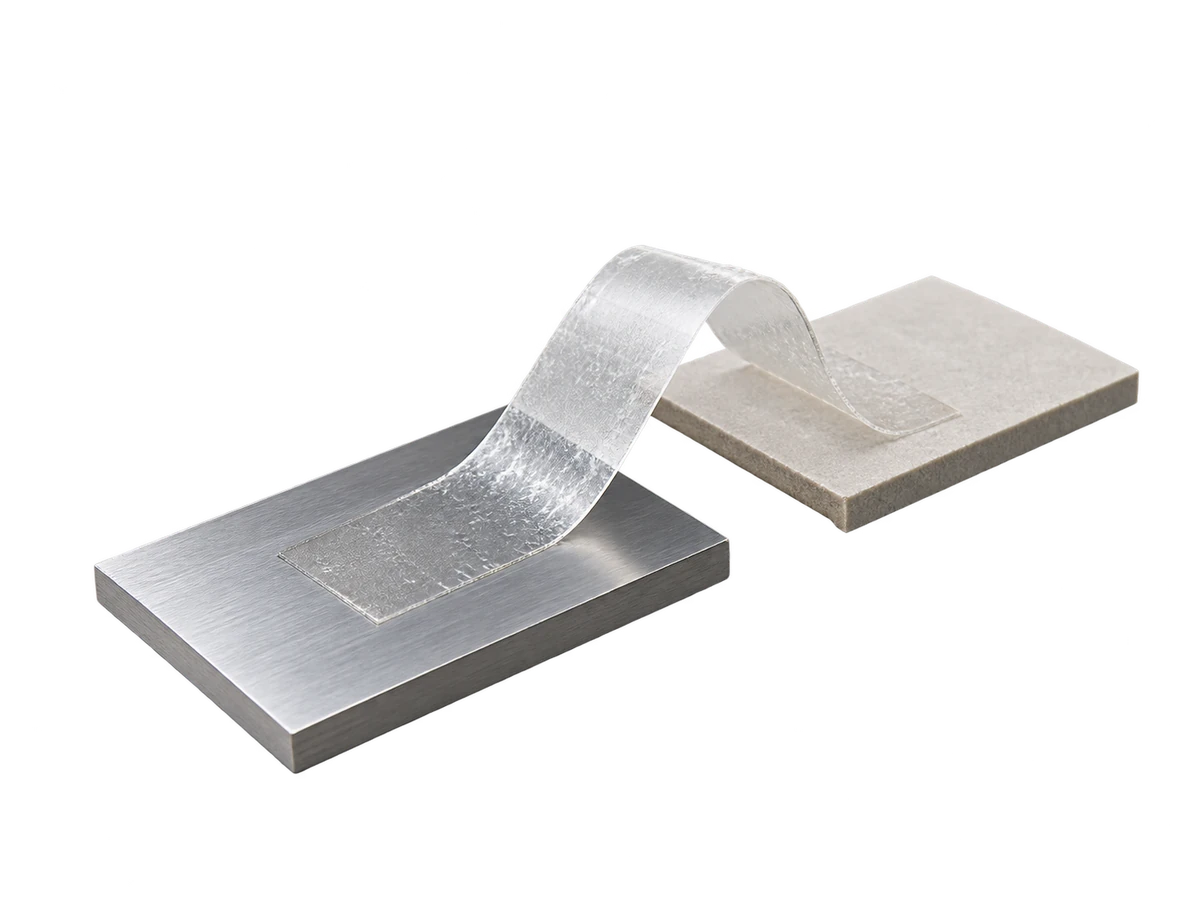
A pressure-sensitive tape bonds when the adhesive makes close contact with a stable surface under application pressure. Surface energy, contamination, temperature and time after assembly affect that contact and bond build; the finished tape still must suit the substrate and service load.
The interface must make contact
A pressure-sensitive adhesive is supplied ready to bond; it does not rely on a liquid adhesive curing after assembly. Applied pressure brings the adhesive into contact with microscopic surface features. The 3M explanation of PSA chemistry describes adhesion under light pressure and no liquid-to-solid phase change. That is a mechanism description, not a claim that every tape bonds equally to every surface.
A smooth-looking part can still carry oil, mold-release material, dust or an unstable coating. The 3M surface-preparation bulletin calls for a stable, clean and dry surface for its VHB products. Use its procedure only for a compatible tape and substrate; aggressive preparation can damage some finishes.
Pressure and time are test conditions
Pressure helps the PSA wet the surface; compare candidates at the same application pressure, temperature and dwell rather than treating an immediate handling bond as final strength.
A sample pressed by hand and tested immediately is not directly comparable with one rolled down at a defined force and tested after conditioning. Record the actual application tool, temperature, pressure method and time to handling. Many PSA constructions build bond after assembly, but the rate and final result depend on the model and substrate. Do not turn one supplier’s dwell guidance into a universal Broadya specification.
Surface energy narrows the first trial
PP and PE are commonly low-surface-energy plastics. A clean surface can still need a suitable adhesive or treatment; a material label alone does not qualify the finished joint.
Low surface energy makes wetting more difficult for some adhesives. 3M’s surface-energy guide places PP and PE in the low-energy group. Actual resin grade, additives, texture and treatment also matter. Before rejecting a tape family, ask for a construction intended for the named surfaces and compare it on production-representative parts.
The double-sided tape selection guide develops the later material-choice step. If a production joint is already lifting, the PP/PE edge-lift diagnosis starts from the failed interface and load path instead.
How contact turns into a bond
A pressure-sensitive adhesive arrives ready to bond. Application pressure helps it conform to microscopic surface features and increases real adhesive-to-surface contact. This is why touching the part is not the same as creating a repeatable interface. Surface cleanliness, topography, formulation and pressure method all affect the contact that can form. The 3M VHB preparation bulletin describes this relationship for VHB products; its stated application pressures and bond-build times are guidance for those products, not universal PSA constants.
Separate initial handling from bond development. A part may resist light immediate movement while adhesion continues to build. Waiting cannot repair an oily, unstable or incompatible interface. Define the assembly pressure, time to handling and test method for each candidate. If any changes between samples, the comparison mixes process variation with material response.
Read the surface before selecting chemistry
Surface energy is one screening clue because it affects how readily an adhesive can make intimate contact. 3M’s surface-energy guide places polypropylene and polyethylene among low-surface-energy materials. That is a reason to check resin grade, additives, treatment and adhesive compatibility; it does not prove that every PP or PE part will fail. Texture, curvature and an unsupported bond land also matter, even when the chemistry is suitable.
For a first comparison, identify both adherends and the joint geometry, hold preparation and pressure constant, and test after the same dwell and conditioning. If contact is visibly incomplete or the surface is unstable, correct that process condition before interpreting a chemistry comparison. If a clean, repeatable surface still releases at one interface, investigate adhesive compatibility or treatment. This gives the mechanism a decision consequence instead of the generic advice to clean a surface.
Use the tape selection framework after the interface and load are defined. If a production assembly is already lifting, the separate PP/PE edge-lift diagnosis starts from the observed failure.
Next step
Share the substrate pair, joint drawing and planned application conditions if you need a construction to trial against this mechanism.
Discuss this application
Share the substrate, joint or drawing, service conditions and the decision you need to make.