
APPLICATION GUIDE · INDUSTRIAL DOUBLE-SIDED TAPE
Buying Double-Sided Tape in Bulk: Choose the Roll Format Before the Quote
Plan bulk double-sided tape orders around roll format, conversion yield, lot control and release schedule.
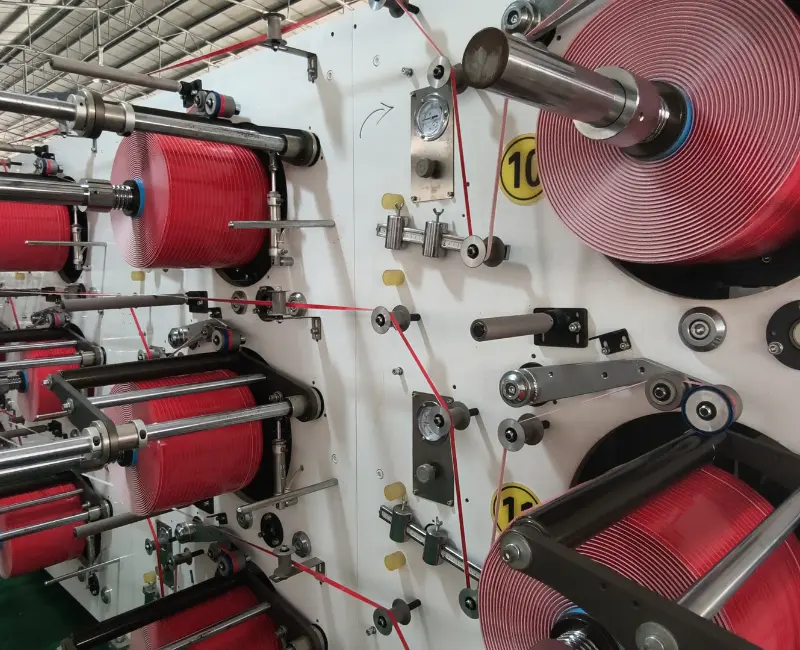
Buying bulk double sided tape starts by defining whether production needs master rolls, slit rolls or converted parts; format determines the work, yield and controls included in the order.
How to buy double-sided tape in bulk for production
Bulk can mean a jumbo roll, a slit roll, a spool or a finished die-cut component. These are not interchangeable purchasing units. Start with the converter’s equipment, the assembly line’s roll holder or the OEM’s part-placement process. Then compare cost per usable area or finished part rather than comparing a roll price alone.
Choose master rolls, slit rolls or converted parts
BROADYA lists master-roll, slit-roll and die-cut options across product pages. The acrylic foam page gives one family’s example formats; do not apply those dimensions or MOQ to every tape.
For a master roll, confirm width, length, core, unwind direction, splice policy and slitting capacity. For slit rolls, check web width, roll diameter, liner release and line handling. For die-cuts, quote from the controlled drawing and include tolerance, liner matrix and pickup features. The right format can reduce trim waste or setup time, but the calculation depends on the real line.
How converting format changes usable cost
State the exact product family or performance boundary, substrate, dimensions, annual and release volume, packaging, storage and required documents. For converted parts, include the drawing revision and inspection method. Existing mesh jumbo-roll specifications and PET tape RFQ guidance cover narrower product scopes.
A converter with slitting capacity may prefer master rolls; a distributor or production line needing ready widths may prefer slit rolls. Compare usable yield, handling equipment and the actual width range for the selected family.
Provide a controlled drawing, material stack, dimensional tolerances, liner and part-pickup requirements. Validate tool layout and part handling before committing to repeat volume.
Separate forecast from the committed release plan
See the related mesh tape jumbo-roll specifications for the narrower application details.
See the related PET tape RFQ for converted parts for the narrower application details.
How to qualify a bulk tape order before scaling
Send the tape family, roll or part format, drawing/width, release volume and converting equipment to compare a bulk supply route.
A bulk order is easiest to compare after the buyer defines what is being purchased: master rolls, slit rolls, sheets, kiss-cut parts or a converted kit. Each format moves work to a different point in the supply chain. A converter may value width and roll length; an assembly plant may need a part that arrives ready to place. First capture the end-use part, the tape construction already qualified, the converting operations required and the packaging that protects the product through storage and line use.
Separate price per area from total usable cost. Yield can change with slit width, edge trim, roll length, splice limits, liner handling and the number of parts per converted sheet. A quote should make its unit clear and state whether it covers raw material or finished components. Compare equivalent constructions and formats, not merely nominal roll prices. If the current assembly uses die-cut shapes, a lower-cost jumbo roll may shift slitting, cutting, inspection and scrap back to the buyer, changing the real economics.
Control receiving inspection and lot identity
Define the release schedule and inventory risks alongside the order size. A large purchase can reduce ordering frequency, but it also creates storage time and exposure to packaging damage or specification changes. Confirm the lot identification, shelf-life or storage instructions provided for the exact model, and the change-notification process. Do not assume a generic shelf life or MOQ: those values depend on the product and supplier quote. Agree how samples, first articles, production lots and replacement stock will be identified before scaling up.
A practical procurement package includes a drawing, target width and length, core or roll requirements, tolerance, liner orientation, splice criteria, packaging, shipment cadence and annual demand estimate. Add a clear acceptance plan for the first converted batch. The supplier can then quote the required format and identify which capabilities are confirmed, outsourced or still subject to review. BROADYA presents multiple tape families and converting options on its catalogue; the exact feasible format and commercial terms still need confirmation for the chosen construction.
What information belongs in a bulk tape RFQ
Before committing the full quantity, compare a production-representative converted sample with the assembly process. Check unwind, placement, release-liner handling, part dimensions and packaging condition. Confirm that a change in tape model, liner, adhesive or converting source will trigger the agreed approval step. This protects continuity: the buying decision should cover not only how many rolls to order, but also how the approved construction remains identifiable and reproducible across deliveries.
Forecasts should be translated into a release plan the supplier can actually quote. State whether the estimate is annual, monthly or a one-time launch quantity, and identify whether the buyer needs safety stock or staged deliveries. If demand is uncertain, distinguish the committed order from the planning forecast. The supplier can then clarify what is confirmed, what depends on a minimum run and how a schedule change affects the quote. Do not imply a delivery commitment until the supplier has confirmed it in writing.
Keep receiving inspection proportional to the risk of the format. A converted die-cut part may need checks for dimensions, liner orientation and placement features, while a roll may need width, length and unwind observations. Define what constitutes an acceptable lot before the shipment arrives. If packaging protects the adhesive surface or liner through storage, inspect it at receipt and record any damage. These details convert a low unit quote into a purchasing plan that can support repeatable assembly rather than a one-off price comparison.
For repeat orders, retain a reference sample and link it to the purchase specification and lot record. This is especially useful when the finished tape part is cut, slit or repackaged after the master roll arrives. Define who owns incoming inspection, who approves deviations and how damaged packaging is reported. If the buyer is sourcing several product families, keep each construction’s SKU and qualification record distinct. Bulk purchasing should improve supply planning without making product identity harder to verify at the receiving dock or on the assembly line.
Frequently asked questions
What does buying double-sided tape in bulk mean?
It may mean master rolls, slit rolls, sheets or converted parts. State the required format because each shifts different converting, inspection and handling work to the supplier or buyer.
How should buyers compare bulk tape quotes?
Compare equivalent tape constructions and finished formats, then consider usable yield, converting operations, packaging and delivery releases. Do not compare a raw jumbo roll directly with a ready-to-use converted part.
What details should a bulk tape RFQ contain?
Include the qualified model, drawing or width, roll or part format, tolerances, liner orientation, packaging, forecast versus committed volume, delivery cadence and acceptance criteria.
Discuss this tape application
Share the substrates, joint geometry, process and service conditions so the team can scope an appropriate tape construction.