
MATERIALS & TECHNOLOGY · PSA
Acrylic vs Rubber Adhesive: Where Does Hot Melt Fit?
Compare PSA chemistry without mistaking hot-melt processing for a third material family.
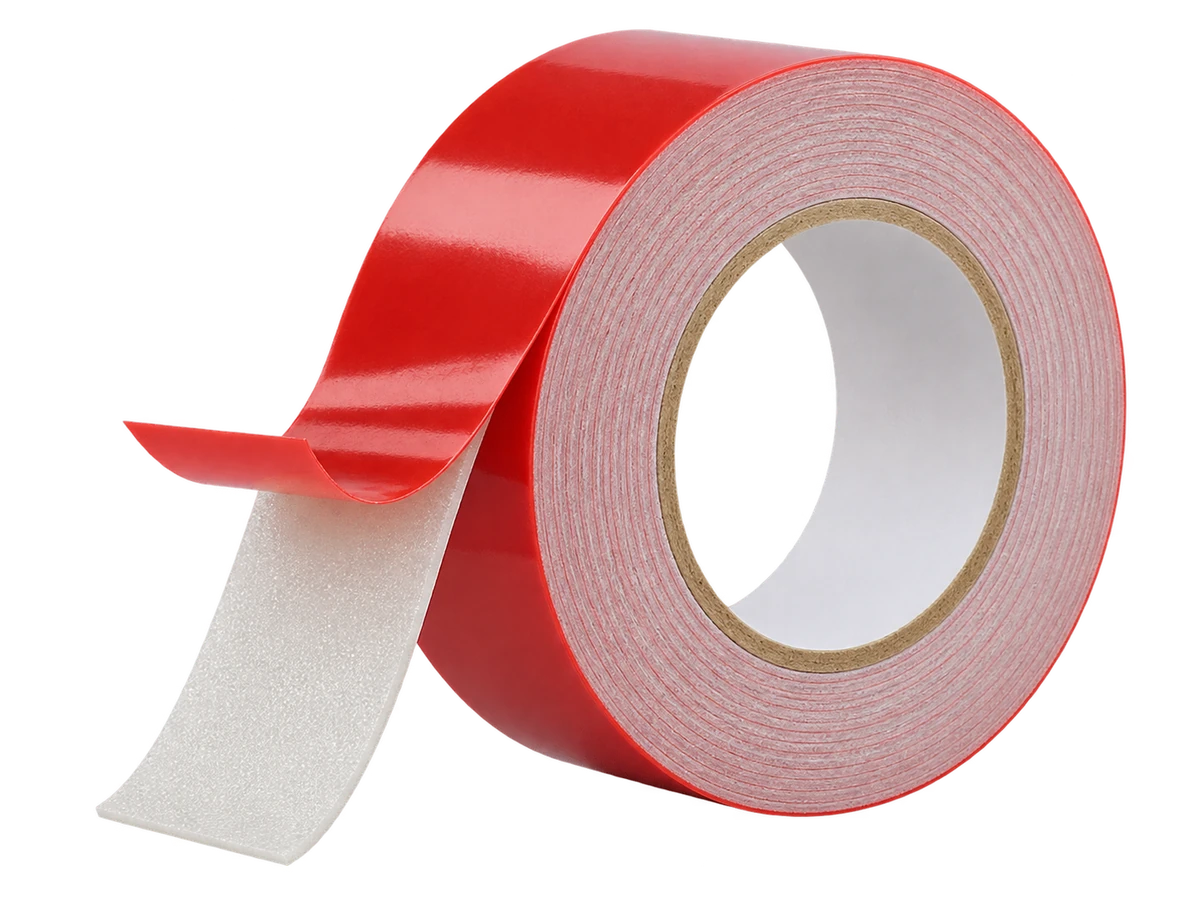
Acrylic vs rubber adhesive is a chemistry decision, not a brand name. Compare the two adhesive families first, then ask what the hot-melt label describes in the actual product formulation and coating process. Hot melt is not a third peer chemistry with one predictable performance profile; shortlist finished tape models against the substrate, initial bond window and service exposure.
First untangle the label
“Acrylic” and “rubber” describe broad PSA chemistry families. “Hot melt” commonly describes a material applied while molten and the related processing route; it does not identify a unique third chemistry with fixed tack, aging or temperature behavior. 3M’s adhesive classification even notes hot-melt products with permanent pressure-sensitive behavior. A vendor should identify the actual adhesive family and finished-tape construction before a buyer uses the label in a material specification.
Match the bond window and the service window
A fast handling bond or difficult surface may make a rubber formulation a useful first candidate, but 3M notes greater vulnerability to aging and environmental exposure than many acrylic constructions; actual models still require comparison. If heat, UV or aging exposure drives the specification, start with acrylic models documented for those conditions rather than selecting on first-touch tack alone; verify the finished construction and test method.
These are shortlist directions, not a ranking of every tape. 3M’s chemistry comparison describes rubber PSAs as generally building an early bond quickly and many acrylic PSAs as offering wider environmental options. Tackifiers, formulation, adhesive thickness, carrier and liner change the result. A rubber product can be engineered for a demanding use, and an acrylic product can be formulated for low-energy plastics. Compare models under the joint’s actual load, substrate and conditioning.
Two common decision paths
| Candidate | When it deserves a trial | What can reverse the choice |
|---|---|---|
| Acrylic PSA | Broad formulation range with generally stronger environmental-aging options in 3M guidance. Prioritize documented acrylic models when aging or exposure is the binding constraint. | A specific acrylic grade may fail initial-tack or LSE needs; test the model. |
| Rubber PSA | Typically faster initial bond in 3M educational comparison. Investigate where immediate handling and substrate wet-out dominate. | UV, heat or long-term aging may reverse the initial choice. |
Short assembly-to-handling time on a difficult surface. Start with Rubber PSA: Fast initial bond may help the handling window. Change course if Service aging or model test failure outweighs early tack.
Long service with UV or heat exposure. Start with Acrylic PSA: Acrylic formulations offer documented aging and environmental options. Change course if Specified acrylic model fails the actual substrate or immediate handling criterion.
Build a test that can answer the question
Separate “can we handle the part immediately?” from “does it survive service exposure?” Measure the first at the line’s real dwell time; assess the second after the specified aging, temperature and environmental sequence. Keep adhesive-coated area, substrate preparation and peel or shear method consistent. If a tape described as hot melt passes or fails, record its named chemistry and construction before attributing that result to a whole class.
Use the tape selection framework when carrier, thickness and load direction are still open.
What “hot melt” tells you—and what it leaves open
“Hot melt” usually identifies how an adhesive is applied during coating: it is applied molten and then cools. It does not, by itself, identify whether the finished PSA is rubber-based, acrylic-based or another formulation, nor establish aging life, temperature limit or substrate compatibility. A specification that says only “hot-melt tape” leaves the chemistry and finished construction ambiguous. Ask for the named adhesive family and exact tape model; if these cannot be identified, treat the candidate as unqualified rather than approving it by label.
Compare finished constructions: adhesive family on each side, carrier, thickness, liner and intended substrates. 3M’s chemistry overview describes broad trends: rubber PSAs often build an early bond quickly, while many acrylics offer wider environmental-aging options. These are shortlist clues, not model-specific guarantees.
Use the binding service constraint to set the first candidate
If the line needs a part to stay in place soon after application, a rubber PSA can deserve an early handling trial, especially where initial tack matters. It should lose priority if the specified heat, sunlight, oxidation or aging exposure is not supported for that exact construction. If service exposure dominates, start with an acrylic model documented for those conditions, then verify its initial bond and target substrate. “Acrylic” is not an automatic pass: a formulation can miss the handling window or fail on a low-energy plastic.
Separate two acceptance questions. Can the line handle the part at the required time? Test at the actual assembly-to-handling interval and production pressure. Will the bond meet service requirements? Test after the specified conditioning with the actual adherends and load mode. Do not collapse both into one immediate peel result. Remove a candidate if it fails its binding constraint, even if another result looks favorable.
Keep the chemistry comparison controlled
Use the same substrate lot, cleaning, bonded area, pressure, dwell, test geometry and conditioning for both candidates. Record whether the adhesive is rubber or acrylic and whether “hot melt” describes its coating route; do not infer one from the other. If chemistry and carrier both change, the outcome cannot be assigned to chemistry alone. Supplier data can guide which sample to test, but cannot rank untested alternatives. The double-sided tape selection guide covers carrier, thickness and load direction when those decisions remain open.
Next step
Share substrates, bond geometry, time to handling, exposure and incumbent failure so candidate constructions can be compared on a common test plan.
Discuss this application
Share the substrate, joint or drawing, service conditions and the decision you need to make.