
APPLICATION GUIDE · FOAM TAPES
Acrylic Foam Tape for Industrial Bonding
Five real-world application directions, the construction behind the bond, and the questions to answer before you request a sample.
- Model-specific options
- Roll and die-cut formats
- Sample review available
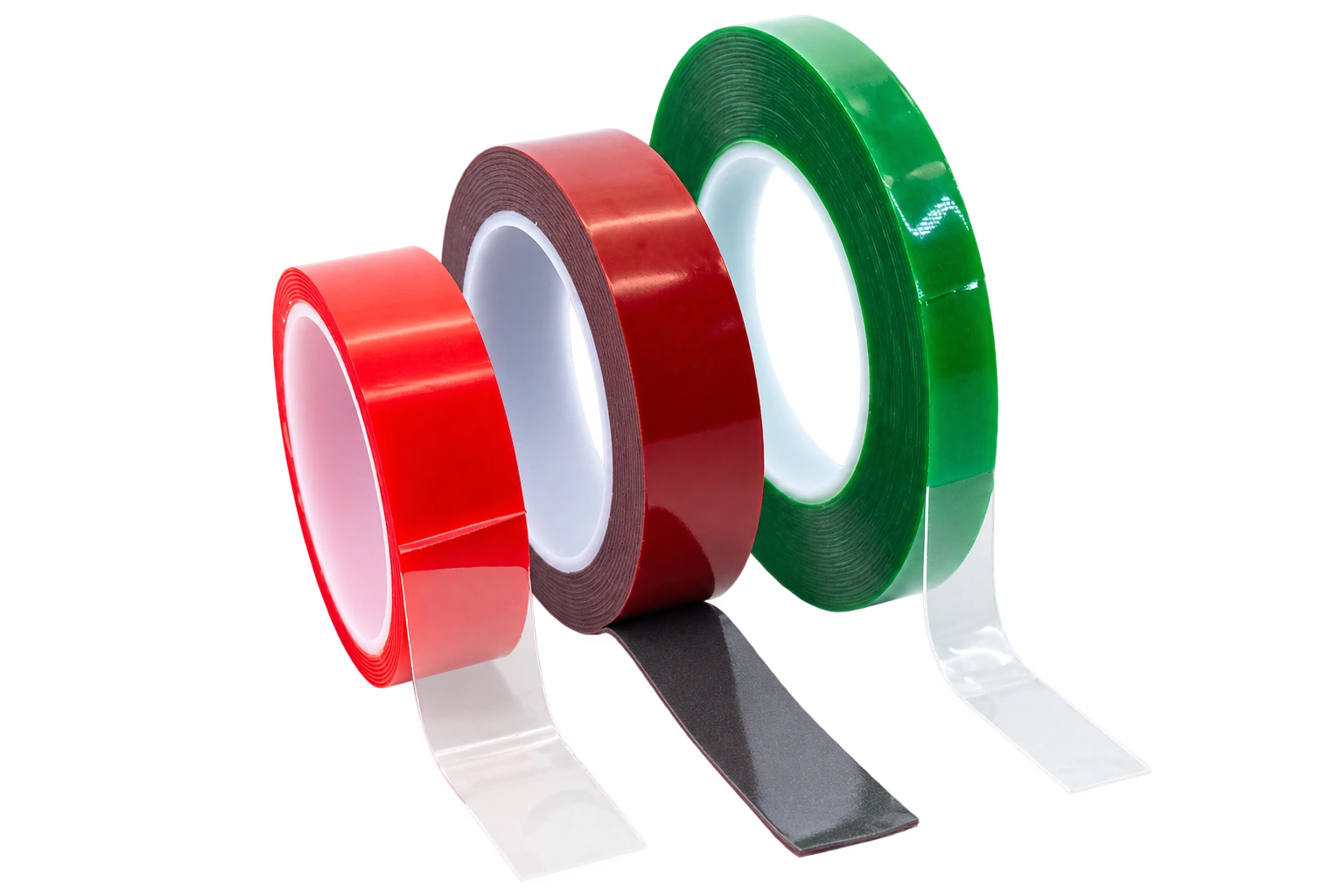 ACRYLIC FOAM / DOUBLE-SIDED
01 / THE SHORT ANSWER
When does acrylic foam tape make sense?
It is a candidate when a design needs a continuous, concealed bond between compatible surfaces and can be validated as a complete assembly.
Acrylic foam combines a foam carrier with adhesive on both faces. In suitable designs, the construction can spread the bond across an area and accommodate small differences between parts. That makes it worth evaluating for trims, panels, enclosures and other assemblies where visible fasteners are undesirable.
The tape name alone does not confirm suitability. Surface finish, bond width, pressure, dwell, temperature and loading all affect the result. Start with the joint drawing and qualify the exact construction on production-representative parts.
Why engineers consider tape before adding another fastener
Mechanical fasteners remain essential in many assemblies, but they also affect how a product is designed and built. A screw may need a hole, a bracket, access for a tool and a visible cap. A continuous tape bond can simplify a joint when the surfaces, loads and service conditions are suitable. It can also help teams attach trim or panels without concentrating every attachment point around a fastener.
That does not make tape a drop-in replacement for every screw or weld. The right comparison starts with the job the joint must perform: retain a light cover, resist repeated vibration, seal an edge, or carry a structural load. Those are different requirements and need different evidence. Treat acrylic foam tape as an engineered joining method whose performance belongs to the full assembly, not to the material name by itself.
What the foam layer contributes
Acrylic foam tape has a viscoelastic foam carrier with adhesive on both sides. In a properly designed joint, the foam can conform to small surface variations and distribute stress over a bonded area. The thickness also gives designers some freedom when joining parts that do not sit perfectly flush. Those characteristics make foam tape a candidate for trims, panels and covers where a neat, continuous bond line is valuable.
The same flexibility creates design questions. A very thin tape may not bridge the gap a joint actually has. An overly thick or soft construction may allow too much movement. A narrow bond line may leave edges vulnerable to peel. A surface that appears smooth may still carry a low-energy coating, mold release or cleaning residue that prevents reliable wet-out. Selection has to balance conformity with the stiffness and restraint the assembly needs.
Think about the load direction before comparing data
Joint geometry changes how a bond experiences force. Shear acts along the plane of the tape. Tension pulls the parts directly apart. Peel begins at an edge and progressively lifts the tape. A joint with a large apparent area can still be vulnerable if a flexible panel creates a lever that pries up one edge. Whenever possible, design the assembly so expected service loads are shared across the bond area and edge peel is minimized.
Draw the joint and mark where force enters, where the parts are supported, and which edges are exposed. Include gaps, radii, overlaps and tolerances. This simple drawing often reveals more than choosing a thickness from a product family table.
02 / INSIDE THE MATERIAL
A layered construction, designed for two-sided contact
Understanding the layers helps your team specify the right tape format and ask better validation questions.
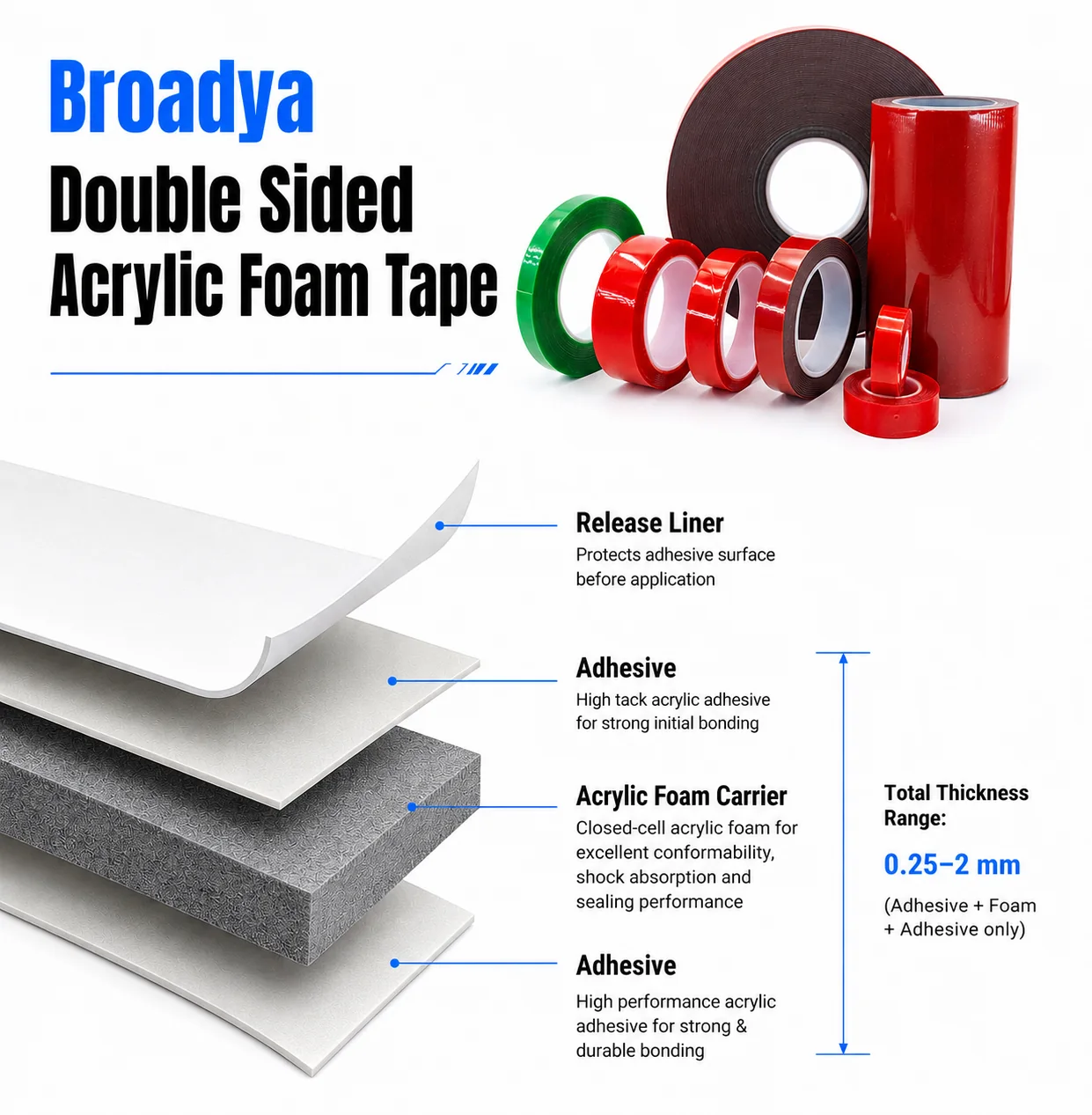
The construction shown on BROADYA’s product page places a release liner over an adhesive layer, an acrylic foam carrier, a second adhesive face and a second liner. The carrier provides the tape’s thickness; the two adhesive faces contact the parts being joined.
During qualification, check how the tape wets out on both surfaces, how the parts are aligned, and whether the bond line remains within the drawing limits. If one surface is painted, coated or textured, include that exact finish in the sample trial.
Foam thickness is not a substitute for joint control
A thicker carrier can provide more compliance for uneven parts, while a thinner bond line can suit close-fitting components. But thickness alone does not predict whether a joint will hold. Adhesive chemistry, foam properties, substrate surface energy, bond width, application pressure and dwell all contribute. Confirm thickness together with finished-part tolerances and how the tape will be applied on the line.
Also account for the liner and converting format. A master roll may be economical for manual or automated application, slit rolls can match a line width, and die-cut pieces can improve repeatability around a component. For a sample request, include a drawing and tell the supplier how operators or equipment will pick, place and press the part.
03 / SUBSTRATES & PREPARATION
The surface is part of the bonding system
Two parts that look similar can bond differently when their coatings, texture or cleaning history changes.
Before selecting a tape, identify both adherends as specifically as possible. “Metal” could mean stainless steel, anodized aluminum, a powder-coated panel or a painted part. “Plastic” might refer to ABS, polycarbonate, polypropylene or a filled grade. Surface treatments and production aids can change adhesion even when the underlying material stays the same.
Build a representative surface preparation into the trial
Use production parts or coupons made with the same material, coating, cure and process history. Clean them with the method your factory can consistently maintain. If a primer or special treatment is being considered, include it in the documented process and validate it as part of the assembly. Avoid handling the bond area after cleaning, and keep dust, oil, fingerprints and release agents away from the surface.
Application pressure helps the adhesive make intimate contact with the substrate. Follow the selected product’s instructions for pressure and application conditions. Press along the full bond line rather than only at isolated points, and avoid trapping wrinkles or stretching the tape during placement.
| What to record | Why it changes the result |
|---|---|
| Substrate grade and coating | Different finishes and treatments can have different surface energy and adhesion behavior. |
| Cleaning and handling | Residue, moisture or fingerprints can interfere with contact at the adhesive interface. |
| Application pressure and temperature | They affect contact and wet-out; record the real production range. |
| Dwell before loading | Bond development takes time; define when the part will see its service load. |
Do not rely on a quick hand pull as the only qualification. Agree on the conditioning time, environmental exposure, loading direction, measurement method and acceptance criteria before comparing candidates. For regulated or safety-related applications, use the applicable standards and engineering review.
04 / APPLICATIONS
Five places engineers evaluate acrylic foam bonding
These application directions are drawn from BROADYA’s product information. Final fit depends on the joint design and qualification results.
01Automotive exterior trim
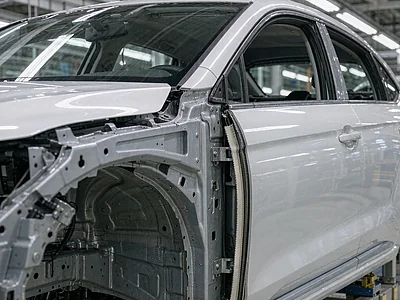
Evaluate trim, emblems and mouldings on the actual paint system. Review edge exposure, bond area and weather conditions before release.
 02
Curtain-wall assemblies
Glass-to-frame bonding requires project-specific engineering review. Confirm the structural role, approvals and evidence required for the system.
 03
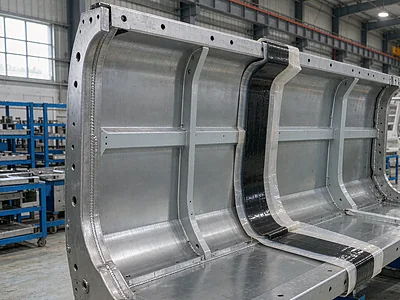
Elevator & appliance panels
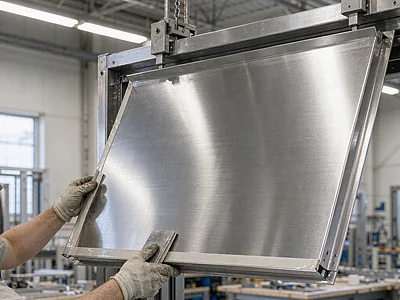
For concealed panel attachment, check surface finish, panel stiffness, overlap and thermal movement on the complete assembly.
 04
Rail interior panels
Include the project’s fire, smoke, vibration and service requirements. Ask for documentation covering the exact construction selected.
 05
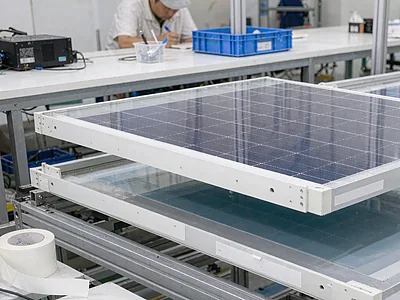
Solar module components
For outdoor joints, define moisture exposure, temperature cycling, substrates and the validation period relevant to the project.
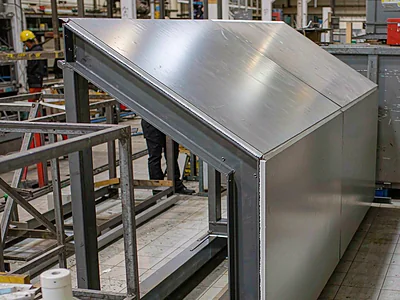 +
Industrial mounting
Where a design may replace mechanical fasteners, verify load path, bond area, surface preparation and the required safety margin.
How the application changes the questions you ask
For automotive exterior trim, the visible edge and paint system deserve attention. A sample should use the production coating and include temperature and moisture exposure relevant to the vehicle program. The team should also check how trim flexes during installation, because a part that springs back can place a persistent peel force on the bond line.
For building or curtain-wall assemblies, a product-page description is not evidence that a tape is approved for a structural glazing design. The project engineer must define the system, applicable code and documentation. Treat the tape as one component of a tested assembly and obtain approvals for the specific use.
Interior panels in elevators, rail vehicles or appliances often combine appearance requirements with vibration, cleaning chemicals and service access. Confirm that the color and edge finish suit the design, and consider how a panel can be removed or replaced if maintenance requires it. For solar and other outdoor equipment, evaluate the full range of weather exposure and movement over the intended life.
In each case, the application image is a prompt for a design conversation, not proof of a universal performance rating. The component drawing, substrates and test plan make the application specific.
05 / APPLICATION & PROCESS
A repeatable process matters as much as tape selection
A promising laboratory bond can become inconsistent if the production method changes from shift to shift.
A simple process map for a first trial
- Verify the parts. Confirm the substrate, coating, fit and lot are representative of production.
- Prepare the surfaces. Follow the agreed cleaning method and allow surfaces to dry as required.
- Place without stretching. Align the tape to the drawing, avoid touching the adhesive, and keep the bond line free of folds or gaps.
- Apply consistent pressure. Use a repeatable hand tool or fixture and press the full bond area.
- Respect the dwell period. Avoid judging final performance immediately; condition the parts according to the agreed test plan.
- Record the outcome. Note failure location, edge lift, alignment, environmental exposure and any process deviations.
This is a planning framework, not a substitute for the selected tape’s instructions. The supplier and customer should agree on process limits and validation criteria for the intended assembly.
06 / SPECIFICATION SNAPSHOT
Options listed for BROADYA acrylic foam tape
Use this snapshot to start a conversation. The model-specific quotation and data sheet should govern the final specification.
| Attribute | Listed options | Confirm before approval |
|---|---|---|
| Carrier | Acrylic foam | Exact construction and model |
| Adhesive | Acrylic | Fit with both actual substrates and their surface finishes |
| Thickness | 0.25 / 0.4 / 0.8 / 1.2 / 1.5 / 2.0 mm | Nominal thickness, tolerance and assembly stack-up |
| Color | Clear / Grey / Black / White | Appearance at visible edges and selected model availability |
| Temperature | Product page lists up to 120 °C | Test method, duration and the selected model’s data sheet |
| Supply format | Master roll / slit roll / die-cut | Finished width, length, liner, drawing and order volume |
Values summarize BROADYA’s current product listing; they are not a universal guarantee for every construction.
07 / FROM IDEA TO SAMPLE
Four steps to a useful tape recommendation
A clear request helps the converting and engineering teams respond with a practical candidate and a testable sample plan.
Describe both surfaces
Name the materials, coatings, finish and cleaning process.
Show the joint
Share bond width, overlap, edge details and tolerances.
Set the service conditions
Include temperature, moisture, UV, vibration and loading.
Agree on validation
Define sample format, conditioning and pass criteria together.
Choose a candidate by eliminating mismatches first
It is tempting to begin with a familiar thickness or a headline temperature figure. A more efficient approach is to screen out candidates that do not match the actual surfaces, bond-line geometry or application method. Then compare the remaining constructions using samples and a test plan that reflects service conditions.
Ask whether the joint is permanent or serviceable, visible or concealed, exposed to water or UV, and loaded continuously or intermittently. Include shipping and assembly temperatures as well as operating temperatures. If components expand at different rates, the joint may experience movement beyond what a static drawing suggests.
Where multiple options remain, request a small, documented comparison rather than changing one variable informally. Keep substrates, cleaning, pressure, dwell and test conditions consistent so the result helps answer the selection question.
08 / TROUBLESHOOTING
When a trial fails, inspect the failure before changing the tape
Failure location and appearance can help identify whether the issue is surface preparation, joint design or process control.
| What you observe | Questions to investigate |
|---|---|
| Clean release from one substrate | Was the surface contaminated, low energy, coated differently or inadequately contacted? |
| Adhesive remains on both sides but the foam splits | Was the bond overloaded, tested too early, or exposed to conditions outside the selected construction’s capability? |
| Edge lifting begins at a corner | Is peel concentrated at the edge? Can overlap, edge shape, bond width or fixture support be improved? |
| Bond varies between operators or shifts | Are pressure, placement, cleaning, part temperature and dwell controlled and recorded? |
| Part moves after assembly | Does the joint need greater stiffness, a fixture during dwell, or a different load path? |
These observations are diagnostic prompts, not a definitive root-cause guide. Preserve failed samples, photograph both surfaces and share the process record with the application team. Changing to a thicker tape without understanding the failure may not address the cause.
09 / QUESTIONS, ANSWERED
Acrylic foam tape FAQ
What thicknesses does BROADYA list?
Can acrylic foam tape replace screws or rivets?
What information should I send for a sample?
Can BROADYA supply slit rolls or die-cut parts?
Send us your inquiry
Tell us about your bonding application. Share the materials, dimensions, service conditions and target volume so our team can recommend a suitable construction.