
BUYER'S GUIDE · PET DOUBLE-SIDED TAPE
How should buyers review PET tape transparency in a visible assembly?
The supplied PET catalogue describes the double-sided tape as high transparency and lists applications that include phone windows and LCD-related parts. Buyers working on a visible assembly should treat this as a reason to request a sample, not as a complete optical specification.
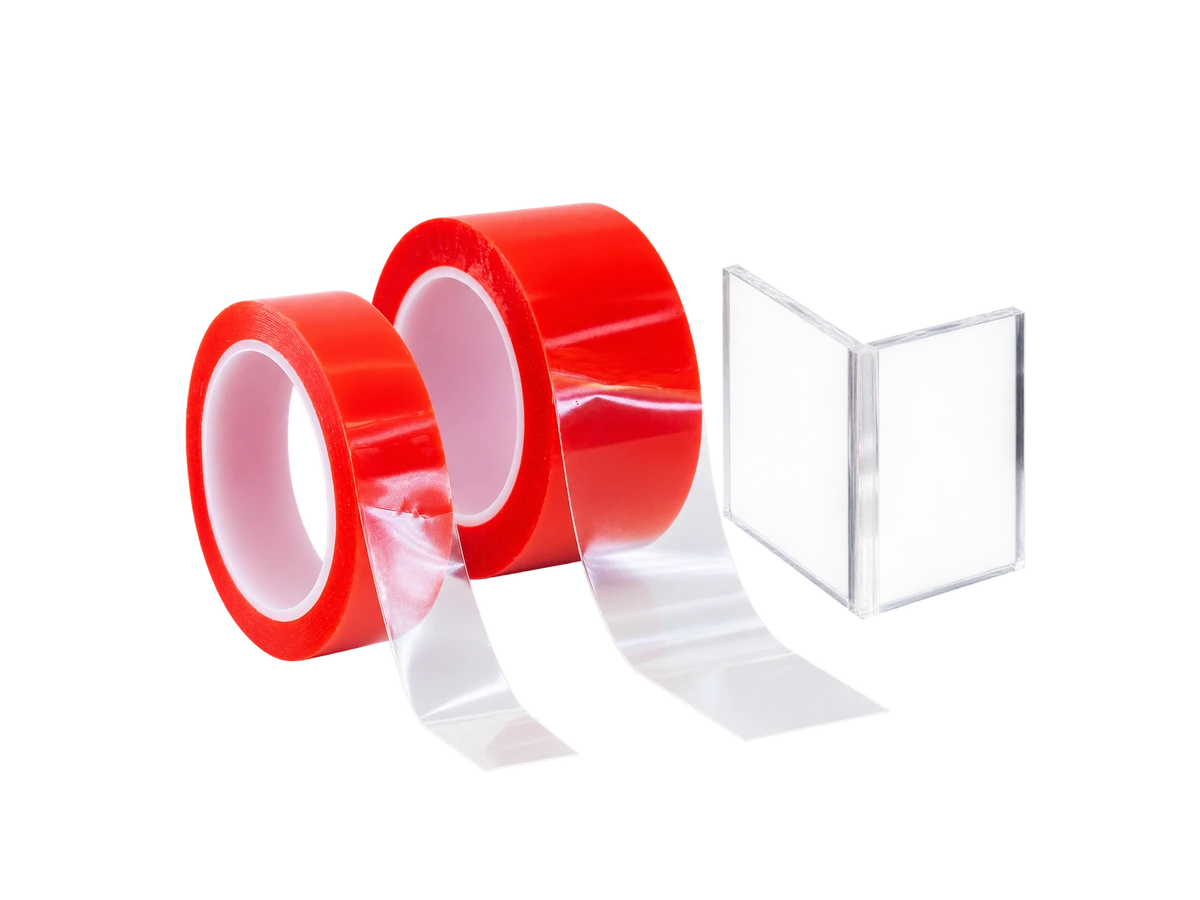
The supplied PET catalogue describes the double-sided tape as high transparency and lists applications that include phone windows and LCD-related parts. Buyers working on a visible assembly should treat this as a reason to request a sample, not as a complete optical specification. The final appearance depends on the exact tape, substrates, geometry, placement, and inspection conditions.
Define what “transparent” means in the part
A buyer may care about a clear edge, low visual obstruction, no bubbles, no discoloration, or a consistent appearance across the finished area. These are different checks. Mark the visible zone on the drawing and identify whether the tape is directly in the viewing path or only visible at an edge. For broader model and specification context, read the PET Tape: Specs, Uses & Selection.
Specify the viewing conditions that matter: lighting, angle, background, inspection distance, and whether inspection is visual or instrument-based. If a numerical optical limit is required, state the measurement method and request an applicable report for the exact product construction. Do not assign a numerical meaning to the catalogue phrase “high transparency.”
Confirm the exact construction
The PET catalogue lists seven thickness models from 30 to 205 microns and describes a PET film carrier with oil-based adhesive. It lists white paper, MOPP red film, and yellow grid paper liners. Ask which specific model and liner will be supplied and whether that combination matches the sample under review. For current constructions and listed applications, see the Double Sided PET Tape product page.
Also confirm the converted dimensions and placement tolerance. A transparent tape can still be visible if its edge is misaligned, if adhesive extends beyond the joint, or if a bubble traps light. The drawing should identify the bond boundary, keep-out areas, corners, and any edge that must remain concealed.
Control preparation and placement
Visible assemblies are sensitive to contamination and handling. Document the cleaning method, glove or tool requirements if applicable, liner removal, placement fixture, application pressure, and dwell. Avoid touching adhesive or optical surfaces during trial preparation. Use production-representative materials and the same assembly sequence intended for the line.
Check whether the liner supports accurate positioning. The catalogue lists several liner options, but the appropriate one depends on handling and conversion needs. If a grid or visual aid is required, confirm its details with the supplier rather than assuming the listing specifies them.
Inspect more than the center of the bond
Look for bubbles, wrinkles, edge intrusion, particles, color shift, uneven contact, adhesive transfer, and alignment variation. Inspect the perimeter and corners carefully; defects often appear where a strip changes direction or where the converted part is narrow. Capture photographs under consistent lighting and retain representative good and bad samples.
After initial assembly, use the buyer’s qualification protocol to condition the part. Repeat the same visual and dimensional inspection afterward. Record whether any change appears in the tape, substrate, coating, or part geometry. If the result is a failure, note its location and likely source before changing the candidate.
Check the candidate construction against the PET tape product details and the listed applications and selection notes; neither replaces optical inspection on the finished part.
Separate optical evidence from compliance evidence
The product catalogue includes a RoHS statement. That documentation may be relevant to a compliance review, but it does not establish optical appearance. Likewise, a visual sample that looks acceptable does not automatically establish regulatory compliance. Review each requirement with its own evidence and approval owner.
Request documents with product identity, revision, test method, and scope. If the available report does not match the requested measurement or construction, mark the gap instead of extrapolating the result.
Buyer checklist
Provide the assembly drawing, visible and hidden zones, substrates, surface finish, tape model or thickness range, finished dimensions, liner, conversion format, placement tolerance, lighting and inspection method, conditioning plan, acceptance criteria, and volume. Ask the supplier to identify documented properties, recommendations, and open validation items.
This process turns a broad transparency description into checks that can be repeated on the actual product. The production decision should follow the buyer’s defined optical criteria and sample evidence. With those details ready, Request a PET tape quote or sample.
Set up a repeatable visual review
Prepare a simple inspection instruction that identifies the viewing side, lighting, background, distance, and areas to inspect. If several people review samples, use the same conditions and reference examples so subjective terms such as “clear enough” do not become inconsistent between shifts. The quality team should define any numerical optical limit and the measurement method before supplier approval.
Separate cosmetic defects from bond-integrity observations. A visible particle may be a cleanliness issue, while edge lift is a bond or geometry observation; both matter, but they require different corrective actions. Photograph defects with a scale or position reference and label the sample construction.
When the tape is hidden after final assembly, review the point in the process when inspection remains possible. The acceptance plan may need an in-process check before the stack closes, as well as a final appearance check after assembly.
Discuss your PET tape application
Share the substrate pair, bond-line dimensions, assembly conditions and target volume so our team can review a suitable PET tape construction and sample format.