
CONVERTING & OEM · UHB TAPE SPECIFICATION
UHB Double-Sided Tape: Translate the Label Into a Verifiable Specification
Compare UHB-labelled products by actual construction and application evidence instead of treating the acronym as a complete specification.
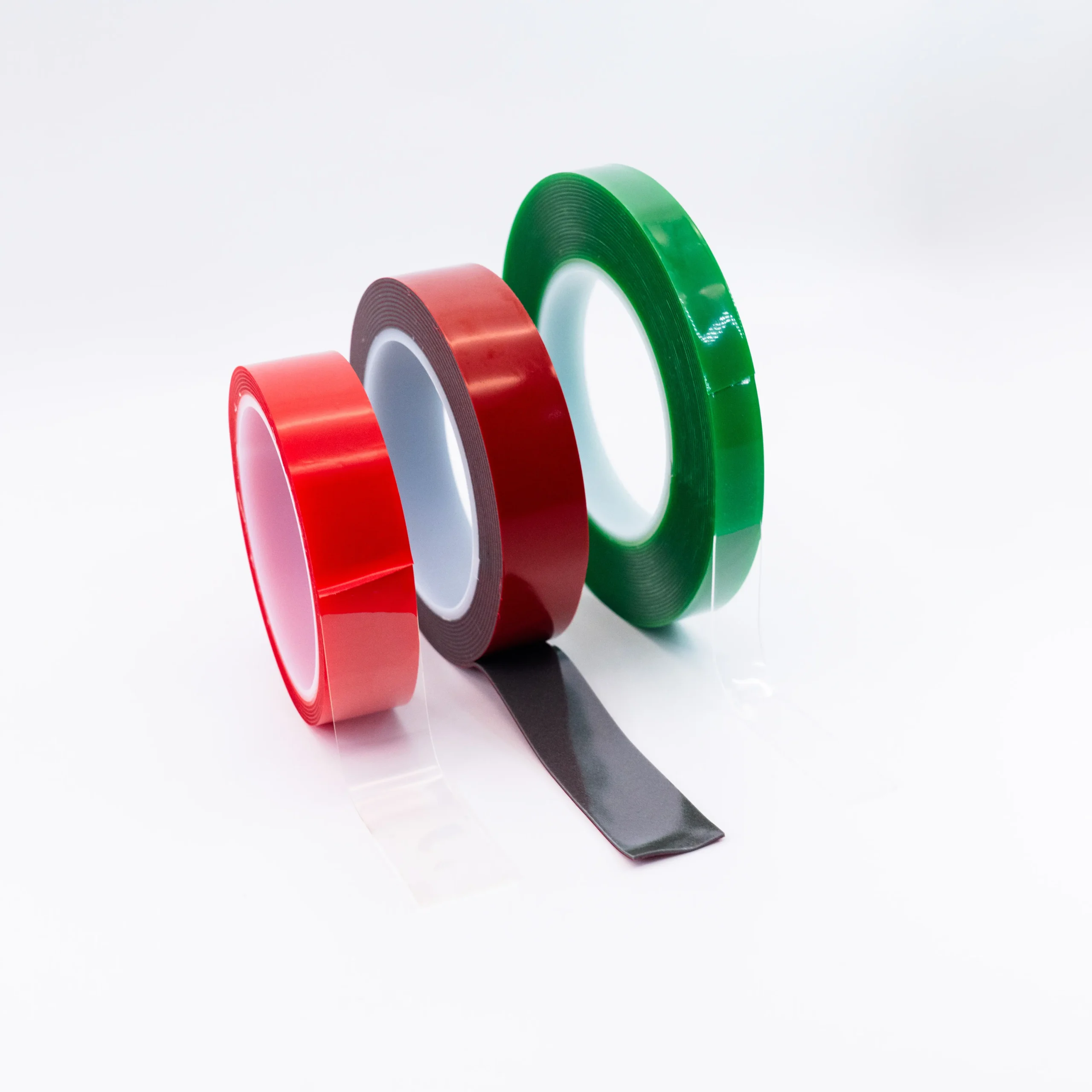
UHB is a market label, not a complete tape specification. Buyers searching for UHB double sided tape should identify the manufacturer and exact model before comparing listings. Compare the actual carrier or core, adhesive faces, total thickness, liner, intended substrates and the conditions behind any performance data. The acronym alone does not establish a shared construction, a universal grade, or equivalence to another branded family.
This distinction changes the buying decision: shortlist products by the joint they must build and the evidence available for that model, rather than by the UHB label or a broad “high bond” claim.
Treat UHB as a label, not a specification
“UHB” appears in manufacturer product families, but the reviewed product pages do not define a cross-industry standard that makes every product bearing the label interchangeable. Capital Tape describes its own UHB range as including acrylic tapes with foamed and solid cores and identifies several series. See Capital Tape’s UHB product family for its series descriptions. ORAFOL lists ten ORABOND UHB models in its Americas product family. See ORAFOL’s UHB product family for the named-model listing. These are different manufacturers’ portfolios; neither page defines the other’s construction.
The practical first step is to treat the term as a search handle. Record the application evidence for the exact model and interface. A quote or sample request should resolve it to an exact product code and revision. If a listing says only “UHB,” ask which manufacturer and model it means before comparing thickness, color, strength, weather exposure or price. Avoid converting a family label into a performance requirement that a supplier cannot verify.
Identify the model and construction
Compare like-for-like fields in a model record. Start with the carrier/core and whether the product is a foam or solid acrylic construction; identify each adhesive face, total tape thickness and whether the published thickness includes the liner. Record color, liner material and release format where these affect appearance, placement or dispensing. Then capture the maker’s named substrates and the test method, dwell, temperature and conditioning attached to performance values.
| Specification field | What to record | Why it changes the decision |
|---|---|---|
| Exact model and revision | Manufacturer, product code and current data sheet | “UHB” alone cannot identify a construction or published test set. |
| Core or carrier | Foam, solid acrylic, film or other stated construction | Changes the joint build and how thickness or movement is accommodated. |
| Adhesive faces | Adhesive type or stated differential face, if applicable | The two mating surfaces may not present the same bonding challenge. |
| Thickness and liner | Tape thickness, liner inclusion, liner type and release direction | Controls bondline planning, stack-up and part handling. |
| Substrates and test conditions | Named surface, preparation, dwell, temperature and method | Values are interpretable only within their stated conditions. |
The comparison is not complete until the evidence is attached to the model. A product-family overview can help identify candidates, but the current model data sheet is the better source for its construction and reported tests. Do not transplant a thickness, temperature range, bond claim or approval from one line into another manufacturer’s product.
Match requirements to substrates and conditions
Write down both adherends, not just the more familiar one. Include material, coating or paint, texture, surface energy if known, and the cleaning or preparation actually used. Describe the joint geometry, overlap or bond area, gap, edge exposure and whether the parts flex or move. State service conditions such as outdoor exposure, moisture, heat cycles, vibration, chemicals or cleaning agents only where they are real requirements.
Use these requirements to filter the data sheet. If the sheet names a substrate, check that it matches the actual surface and finish. If its value comes from a standard panel after specified conditioning, do not read it as a guarantee for a curved, coated or contaminated production component. If the exact finish or combined environment is not covered, mark it as an evidence gap and plan a sample test around the production interface.
The decision should be staged: remove candidates that plainly miss a required construction or interface, then sample the remaining model on representative surfaces. Define what constitutes acceptable placement, bond coverage, edge behavior and performance after the required conditioning. The acceptance method belongs to the application owner; the label does not supply it.
Compare UHB and VHB only at model level
UHB and VHB are names used in product branding and commercial search. They are not enough to make a technical comparison. Capital Tape says its UHB tapes are similar to VHB tapes, while 3M publishes a distinct VHB portfolio (3M VHB family). That wording does not establish that a particular UHB model matches a particular VHB model in composition, performance, approvals or service life.
For a defensible comparison, choose an exact model from each maker and align the construction, thickness, substrate, specimen preparation, method, dwell and environmental conditioning. Compare only values that share a relevant test basis, then state where the conditions differ. If the data sheets do not provide comparable evidence, describe the candidates as different options requiring application testing rather than declaring one equivalent, stronger or better.
Set the sample decision
Send the converter or supplier the model under review, a drawing or joint section, both substrate descriptions and finishes, bond area, service conditions and the intended assembly method. Ask for the current technical data sheet, the exact test conditions behind relevant claims, and confirmation of any requirement not covered by the data. For the trial, record surface preparation, application pressure or fixture, assembly timing, conditioning, inspection points and pass/fail criteria.
Broadya’s public acrylic foam tape page and custom converting overview describe product-family and service scope; they do not establish that a particular UHB-labelled model is stocked, available or qualified for a project. Treat any candidate as pending project-specific confirmation until its model data and sample evidence fit the stated joint.
For a related branded-family comparison, see the existing guide to 3M VHB 5952 vs 4910. It addresses two 3M models; it does not establish an equivalence between those models and a UHB product.
Frequently asked questions
Is UHB a universal tape grade?
The reviewed manufacturer pages use UHB as a product-family label, but they do not establish a universal grade or common construction. Specify the manufacturer and exact model.
Is UHB the same as 3M VHB?
The names alone do not establish equivalence. Compare exact products using construction details, named substrates and test conditions; application testing may still be needed.
What should I include in a UHB tape inquiry?
Include the exact model if known, both mating surfaces and finishes, joint geometry, service conditions, assembly method and the performance or approval evidence required. Separate confirmed requirements from preferences and open questions.
Next step
Provide the candidate model or data sheet, both substrate descriptions, joint drawing, exposure conditions and acceptance method. Ask the supplier to identify which claims apply to the exact model and which conditions require a representative sample trial. This turns a broad UHB label into a checkable sourcing decision.
Discuss your application
Tell us the substrate, the joint and the service conditions. We reply with what fits and what does not.