
CONVERTING & OEM · DIE CUTS
Kiss-Cut vs Through-Cut Tape Parts: Design for Pickup and Placement
Set the cut path from how a part must be supplied, picked and placed.
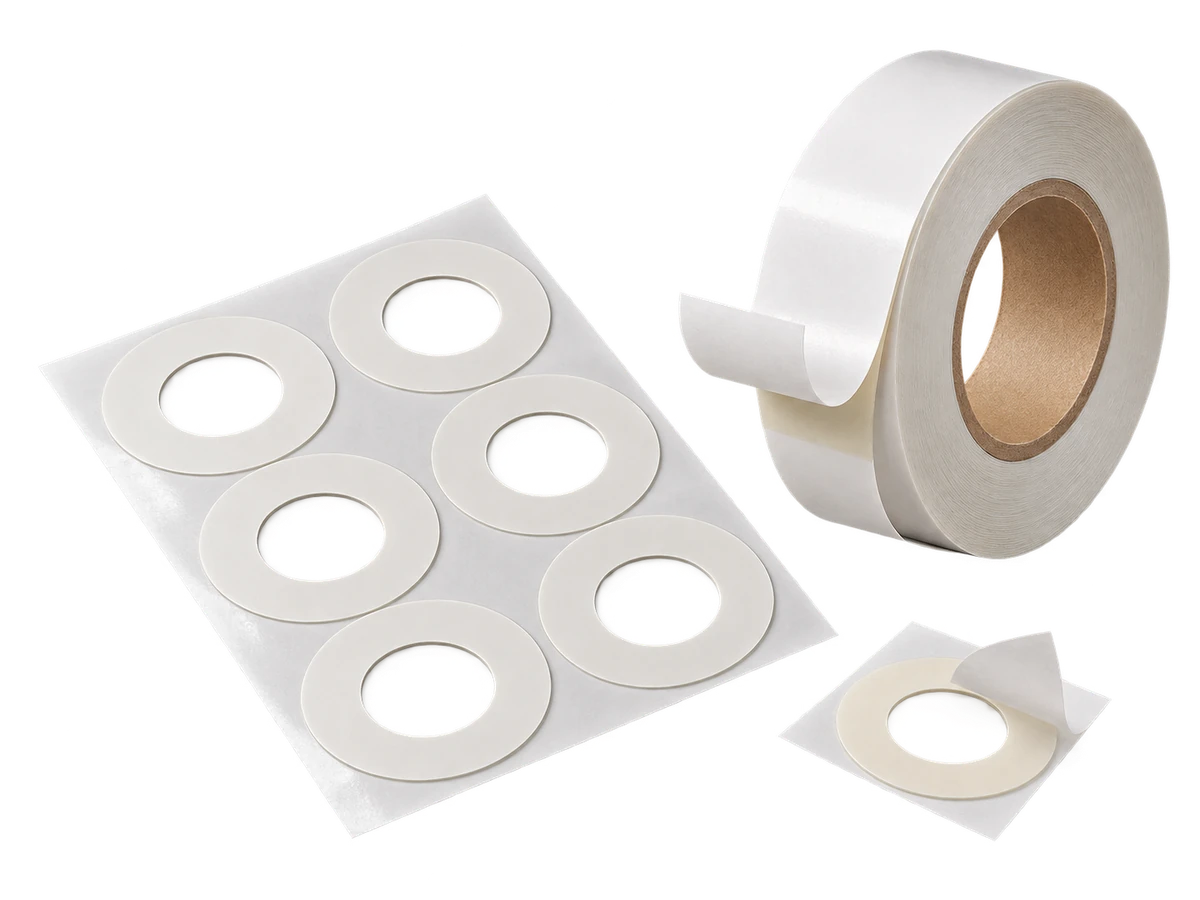
Choose the cut path from how the part is supplied, picked and applied. A kiss cut leaves the carrier liner intact for indexed presentation; a through cut separates the liner too. Neither is automatically better: cut depth, liner integrity, waste removal and pickup behavior must be proven on the actual construction.
Let the pickup motion choose the cut path
If parts must remain indexed on a carrier through storage and feeding, a continuous liner is usually valuable. If a worker or robot handles each protected part separately, a fully cut liner may make more sense. The terms are about which layers are cut, not the quality of the adhesive. 3M’s cutting bulletin defines kiss cutting as leaving the liner intact and full die cutting as cutting it too, in its graphic-film context. Apply the distinction to tape parts only after checking the actual stack.
Cut depth is an acceptance characteristic. A too-deep cut can split or distort the liner; a too-shallow cut can leave adhesive bridges and make waste stripping difficult. Ask the converter to show the cut part after waste stripping and after the real pickup motion. A liner that is nicked too deeply can split; a contour that is not fully cut can pull neighboring material into the part. The appropriate tool setup depends on tape, liner, adhesive flow and feature size.
Put liner features on the assembly drawing
Use the feature only when it matches the station’s grip and peel sequence; it may hold a part on the carrier or expose a graspable edge, but it must not contaminate the bond area or distort placement. tesa’s converting overview describes slitted liners and retaining tabs as selectable features, not universal requirements. Specify which corner is grabbed, which side of the adhesive touches the first substrate, the peel direction and whether an operator or machine needs a pitch marker. Never add a tab that occupies the bond area just because it is easy to draw.
Choose the presentation format
| Candidate | When it deserves a trial | What can reverse the choice |
|---|---|---|
| Kiss cut | Cuts adhesive part while intentionally retaining a continuous liner. Useful for indexed parts on a carrier. | Liner scoring, poor weeding or difficult release can defeat the presentation. |
| Through cut | Cuts the part and liner into separate units. Useful where individual pieces with their liner are handled. | Loose-part handling or registration requirements can reverse the choice. |
Indexed roll or sheet feed with sequential pickup. Start with Kiss cut: An intact liner presents parts at a predictable pitch. Change course if Peel or waste-stripping trial damages the part or liner.
Individually handled part with its own liner. Start with Through cut: A separated liner can travel with each unit. Change course if Station registration or handling loss requires a carrier format.
Pilot the format, not just the adhesive
At the intended station, count clean picks, double picks, liner tears, misplaced parts and adhesive contamination. Record the number of cycles and the acceptance threshold before judging the format. The existing PET tape liner selection covers liner material on PET tape; the custom part RFQ fields helps transfer the approved drawing into purchasing.
Specify the cut as a layer-by-layer operation
A converted tape part is a stack: adhesive, any film or foam carrier, and release liner. Kiss cutting cuts through the part layers while leaving the liner continuous; through cutting cuts the liner too. State which layer must remain intact on the drawing so converter and assembly team use the same definition. 3M’s cutting bulletin defines these operations for graphic films; tape needs its own blade, liner and adhesive-flow setup.
If a station indexes a roll or sheet, a continuous liner may keep pitch and orientation stable. If an operator handles individually protected parts, separated liner pieces may travel with each unit. Start with how the station grips the part: liner, tab, vacuum or mechanical pick. Then choose a cut that supports that motion. A through-cut sheet can still work with a fixture; a kiss-cut roll can fail if release is too difficult or pitch drifts.
Write acceptance checks for the cut and waste
Ask for a sample on the intended stack and die. After stripping waste, inspect incomplete cuts, lifted narrow features, liner splits, adhesive strings and distortion. In 3M’s graphic-film instructions, a score felt through the liner indicates excessive force; too little force can leave material uncut. These are relevant defect mechanisms, but cut depth and force must be developed for the actual tape/liner.
For kiss cutting, verify the liner remains continuous through intended bend, feed and storage and each part weeds without pulling neighbors. For through cutting, verify each unit remains protected, oriented and easy to handle; loose parts must not curl, stick together or lose registration. These require separate acceptance checks.
Add pickup features only for a station need
A retaining tab, slit or extended liner can create a grip point, but changes the release sequence and may create placement errors. Draw pickup corner, peel direction, first bonded surface and final position. Confirm the feature does not expose adhesive to contamination or overlap the bond area. tesa’s converting overview presents these as selectable options, not defaults.
Pilot at the intended station and log clean picks, double picks, liner tears, misplacements, contamination and stoppages against acceptance limits. Record cycle count and reject criteria before the run. The PET liner guide covers liner release; the converted-parts RFQ guide carries a released drawing into a supplier request.
Next step
Send the part drawing, layer stack, intended pickup sequence and pilot-run acceptance criteria for a feasibility review.
Discuss this application
Share the substrate, joint or drawing, service conditions and the decision you need to make.